In football, the objective is simple: Move the ball down the field.
Every positive play matters. A 5-yard run. An 8-yard pass. A quarterback sneak that keeps the drive moving. Teams don’t need every play to be spectacular — they just need consistent progress toward the end zone.
When enough positive plays stack together, the offense gets where it needs to go. However, negative plays change the entire equation.
A missed block leads to a sack. A penalty wipes out a good gain. A bad snap pushes the line of scrimmage backward. The offense now must recover the yards it has lost on top of the yards it needs to get to the end zone.
It’s not quite a football term, but a compounding effect has begun. Instead of 80 yards to paydirt, the offense must gain 100, 110, or, if your linemen keep holding, even more to get a touchdown.
And sometimes, the offense does score that touchdown. But the scoreboard shows only the points, not all the extra effort. The team worked harder than planned, maybe wasting time, increasing injury risk, and providing the opponent’s offense more time to rest up for its subsequent drive.
That is the basic idea behind efficiency debt. It's part of the game for football, but for AEC firms and their BIM teams, it’s far more detrimental.
What Is Efficiency Debt?
Efficiency debt is the hidden work created by avoidable mistakes, inconsistent processes, unclear standards, and repeated corrections.
It is not always dramatic. It is not always visible. It rarely appears as a single catastrophic failure. More often, efficiency debt shows up as small interruptions that quietly accumulate throughout a project. For example:
- A model element placed on the wrong workset
- A Revit warning ignored because the team is moving fast
- A family loaded from an unapproved source
- A sync conflict that delays multiple users
- A project standard that needs to be corrected ... again
- A BIM manager answering the same workflow question for the fifth time
- A team member spending time fixing something that should have been done correctly the first time
Individually, these moments feel manageable, just like the occasional 10-yard penalty or QB sack. But across the game, er, project, the negative events begin to compound. And once they do, they create a second layer of work sitting underneath the planned scope.
That second layer is efficiency debt. It is the work required to overcome the friction inside the process.
The 20% Problem
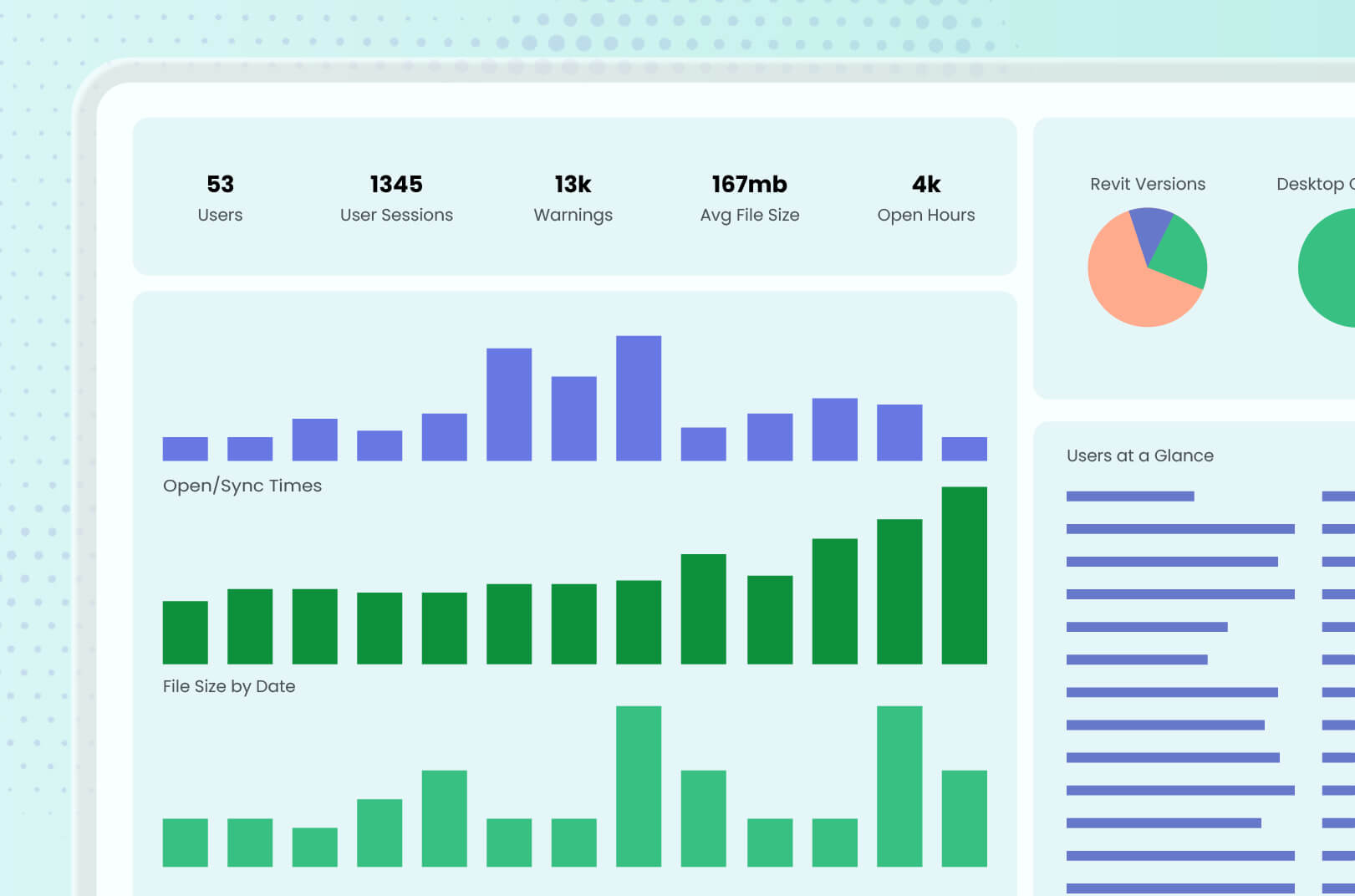
Across our work with Revit teams, a conservative reading of the Guardian Backstage™ data shows that roughly 20% of Revit activity is tied to avoidable inefficiencies. That doesn’t mean 20% of every person’s day is wasted. It means that a meaningful portion of the work happening inside the model is connected to churn, correction, cleanup, delay, repeated guidance, or rework that could have been reduced or prevented.
The issue is that 20% does not behave like a simple 20% increase. A seemingly modest amount of negative activity can turn into nearly 40% more work required to achieve the same result (ie, just three 10-yard negative plays equals 110 total yards to completed a 80 yard drive, 38% more yards to cover).
For example, a project team may still issue the drawings and meet the deadline. The client may still receive the deliverable. But behind that outcome, the team might have absorbed a significant amount of hidden work that was never planned, never budgeted, and never discussed honestly.
The project appears successful because it crossed the finish line. But the team had to run farther than anyone planned. And, frankly, this is exhausting.
Hours Wasted
Consider a typical 10,000-hour architectural project. A reasonable portion of that effort may occur during design development and construction documentation. For the sake of discussion, let’s say 6,000 hours are spent in DD and CD phases.
Of those 6,000 hours, assume roughly 2,000 hours are spent working directly in Revit.
Now ask the uncomfortable question: What is really happening inside those 2,000 hours?
Some of the hours are clearly productive design and documentation work: modeling, detailing, coordinating, refining the set.
But some of it is hidden work:
- Fixing mistakes
- Cleaning up warnings
- Waiting on syncs
- Resolving sync issues
- Recovering lost work
- Waiting for models to open
- Aligning standards
- Correcting content
- Finding or fixing families
- Finding hidden elements
- Explaining workflows
- Repeating training
- Undoing workarounds
- Reworking drawings after something changed unexpectedly
Whew, that’s a lot of Revit actions that aren’t driving progress! After you catch your breath, imagine that if 20% of Revit activity is tied to avoidable inefficiency, it represents approximately 400 hours of efficiency debt on a single project.
At a $150/hour billable rate, that is $60,000 of project value consumed by work that did not directly advance the design, improve the deliverable, or create additional value for the client. As already mentioned, our 20% estimation represents just the negative plays. In reality, the total cost of those negative plays is closer to 40% more work — meaning the actual cost is nearly $120,000!
For many firms, that dollar amount does not show up as a single line item. It does not appear in the project plan as “avoidable Revit churn.” It does not get coded neatly in timesheets. Instead, it disappears into longer days, tighter deadlines, reduced margins, frustrated staff, and less time available for higher-value work.
That’s what makes efficiency debt so dangerous. It is real enough to damage project profitability, but invisible enough to be overlooked.
The Project Planning Problem
Imagine a project manager builds a perfect project plan.
The staffing plan is thoughtful. The milestones are clear. The deadlines are achievable. The fee is tight but workable. Everyone understands the scope, and the team is ready to execute.
Then, halfway through the project, the project manager discovers the team actually has 40% more work to complete than originally planned.
What happens next? In most firms, the answer is not pretty.
The team works longer hours. BIM managers jump in to clean up problems. Senior staff absorbs coordination issues. People rush. Quality suffers. Margins shrink. Everyone does what they need to do to meet the deadline.
But the real problem is not only that more work existed, but also that the additional work was never visible in the plan.
That is how efficiency debt operates. It hides inside normal project activity. It gets treated as the cost of doing business. It becomes part of the culture:
- “We’ll fix it later.”
- “That always happens.”
- “Someone from the BIM team will clean it up.”
- “We just need to get through this deadline.”
- “Long unpaid hours are just part of being an Architect.”
These statements may feel practical in the moment, but they are also signs of a system carrying too much hidden debt.
Where Efficiency Debt Comes From
Efficiency debt usually does not come from a lack of processes, best practices, or standards. Most firms have those. They have BIM execution plans. They have templates. They have content libraries. They provide training and have training material. They have documented best practices.
The problem is that learning and connecting these principles often occurs outside the moment of work.
A user is making decisions inside Revit, under deadline pressure, with project-specific conditions changing constantly. The standard may exist somewhere, but if it is not visible, timely, and easy to follow, it may not influence the decision that really matters.
That gap between the documented standard and the actual moment of action is where efficiency debt mushrooms:
- It grows when users are expected to remember every rule.
- It grows when BIM managers must repeatedly explain the same workflows.
- It grows when model performance issues are discovered only after they become large enough to slow the team down.
- It grows when project leaders lack visibility into what is really happening inside the model.
- It grows when preventable issues are treated as cleanup tasks instead of process failures.
If process allows small mistakes to happen repeatedly, the issue is not simply user behavior. The issue is the system around the user.
What Could 400 Hours Become?
Financial impact matters. But human and project impact may matter even more.
Let’s go back to our hypothetical 400 hours lost to Revit inefficiencies. Consider what individual team members could do with, say, 80 hours back in their schedules.
- They could refine the design.
- They could improve technical coordination.
- They could make the drawing set clearer.
- They could study difficult details more carefully.
- They could mentor younger staff.
- They could coordinate more effectively with consultants.
- They could improve graphical quality.
- They could reduce late nights before deadlines.
- They could simply work fewer unnecessary hours (which will still be 40+ hours)
Whew, catch your breath again! This is the part of efficiency that is often misunderstood. Reducing inefficiency is not only about doing the same work faster. It is about giving teams more capacity to do better work.
Preventing Debt Before It Compounds
The firms best positioned for the next decade will not be the ones that simply ask teams to work harder. They will be the ones that reduce the amount of hidden work required to deliver the same or better outcomes.
That starts with making efficiency debt visible. Firms need to understand where Revit activity is creating friction:
- Where are teams losing time?
- Which actions repeatedly create cleanup?
- Which models are accumulating risk?
- Which workflows require constant explanation?
- Which standards are not being followed because they are too hard to find or too disconnected from daily work?
Once those patterns are visible, firms can begin to prevent them.
That means giving users guidance in the moment decisions are made. It means aligning standards automatically whenever possible. It means protecting critical project elements from accidental change. It means identifying model health issues before they become deadline problems. It means reducing repeated questions by embedding training directly into the workflow.
Most importantly, it means shifting from reactive cleanup to proactive project protection — and that is where the real savings begin.
Why This Matters Now
AEC is entering a period of radical change. Firms are under pressure from tighter fees, rising labor costs, changing client expectations, increasingly complex deliverables, and the rapid emergence of AI and automation.
Chasing the next major technology wave is tempting, but before firms can fully benefit from new technology, they must shore up the processes they already depend on.
If a firm’s current workflows are inconsistent, automation may simply accelerate inconsistency. If project data is unreliable, AI will struggle to produce reliable outcomes. If teams are already buried under hidden rework, new tools may add complexity rather than capacity.
The firms that compete best will be the ones that reduce friction in the work they already do. They will protect their project teams from preventable churn. They will create clearer processes. They will make standards easier to follow. They will give leadership better visibility into risk. They will free up time for the work that actually matters.
Efficiency debt can be reduced, not by asking people to work harder, and not by waiting until the end of the project to clean up everything, but by building better guardrails into everyday workflows.
Firms that reduce efficiency debt will not just save time. They will create more room for better design, better documentation, stronger teams, and healthier projects. And in a market in which every percentage point matters, that may be one of the most important competitive advantages a firm can build.